
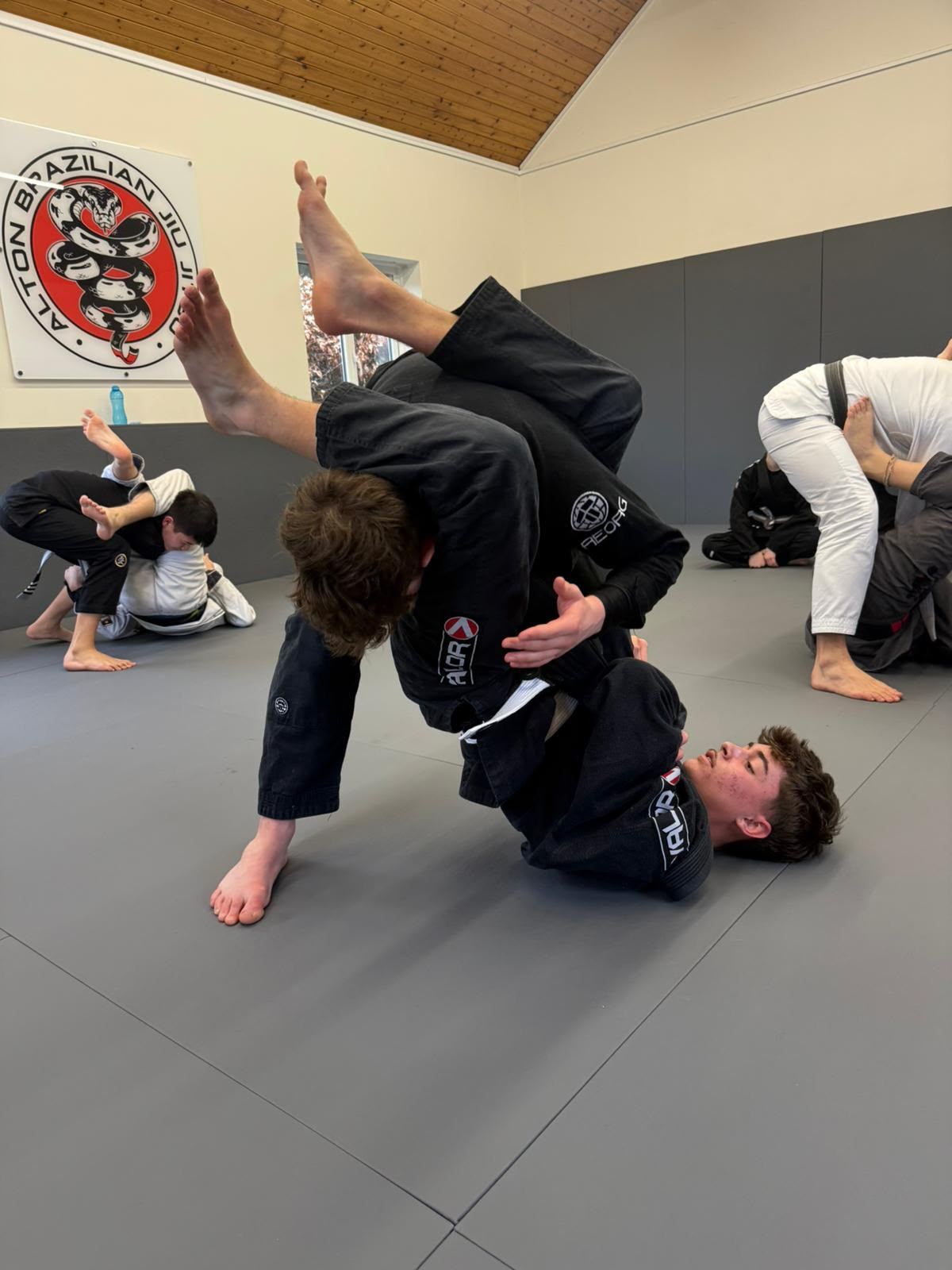
The gentle art
Brazilian Jiu-Jitsu is fought mostly on the ground. Instead of punches and kicks, you use grips, position and leverage to control your opponent, and joint locks or strangles to end the fight — which in training simply means your partner taps and you start again.
Because there's no striking, you can spar hard and often at full resistance without getting hurt. That's what makes BJJ so effective — everything you learn is tested against a fully resisting partner, every session.
History
The story of jiu-jitsu
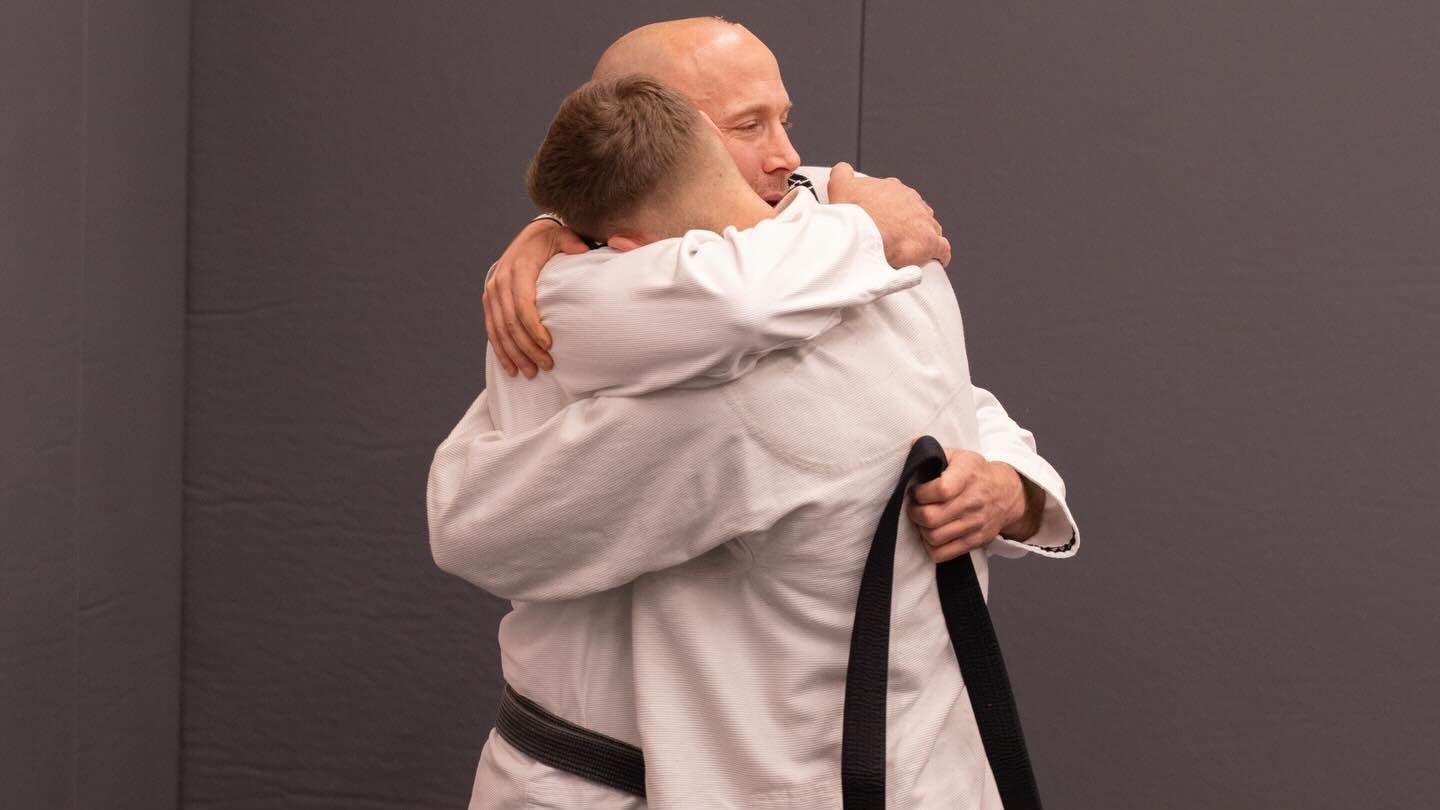
BJJ descends from Japanese jujutsu and judo — the fighting arts of the samurai, refined by Jigoro Kano into a system built around throws and grappling.
Judo master Mitsuyo Maeda emigrated to Brazil and taught the young Carlos Gracie. The Gracie family adapted the art, emphasising ground fighting and technique over strength.
Royce Gracie won the first UFC tournaments against bigger opponents using pure jiu-jitsu — and the martial arts world took notice. BJJ became the foundation of modern MMA.
Millions train BJJ worldwide — for sport, self defence, fitness and community. Alton BJJ brings that tradition to Hampshire, seven days a week.
Why train
What jiu-jitsu gives you
Most real confrontations end up in a grab or on the ground — exactly where jiu-jitsu lives. You learn to stay calm, control distance and escape bad positions.
Full-body strength, cardio and mobility — built by doing, not by counting reps. You'll be too busy solving problems to notice the workout.
Every roll is a puzzle of grips, angles and timing. It's the mental depth that keeps people training for decades.
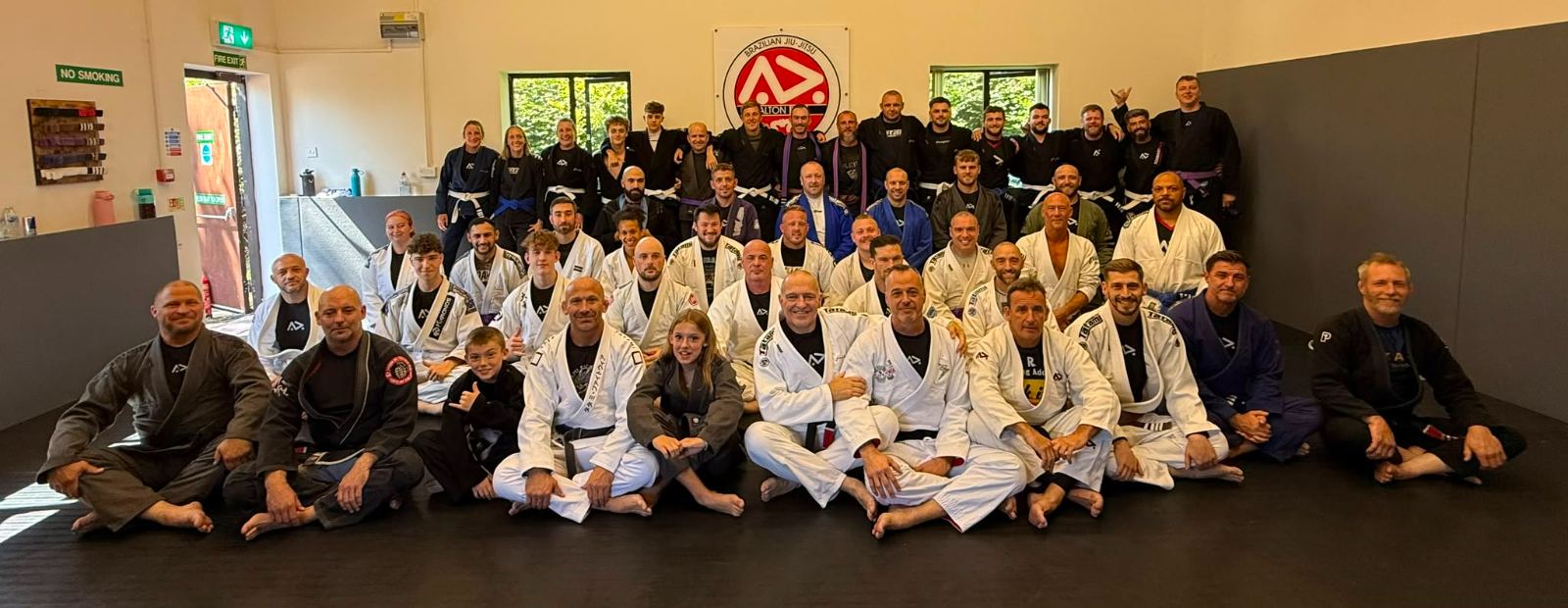
You can't learn jiu-jitsu alone. Training partners become mates — from the kids' class to the over-40s, it's one team.
Come see for yourself
The best way to understand jiu-jitsu is to try a class. Your first session at Alton BJJ is free — no experience, no kit, no pressure.
Book a free trial